(Re)Drafting the elevator pitch

savoy liftThis morning, half way through a conversation with a print salesman about my order of training booklets, I was hit broadside by The Question.

‘So what do you do?’

Wah! Caught unawares, my careful ‘elevator pitch’, the succinct description of my key professional motivations, actions and finer features, completely deserted me.  I mumbled something about ‘engaging’, ‘increasing communication’ and generally sharing the cultural heritage joy.

Hmmm.

After a pause, the salesman said ‘well, I am sure that it very useful to people in your field’.  Ouch, damned, and not even with faint praise.

It made me reflect on how easily we forget how we sound to the people we work alongside but who don’t know us or what we do. And on how, if I really am working to help museums and heritage organisations to relate better to their audiences, I need to make sure that non-sector colleagues, friends and family understand that too.

My elevator pitch has the potential not only to get me work, but also to introduce the cultural organisations I work with to people who previously hadn’t heard of them.  After all, every conversation can be a doorway to another. But by being vague or unclear or by using too much jargon, what we say can slam that conversational door tight shut.

Later this afternoon, quite unprompted, a Facebook friend asked me the same question. So I decided to re-draft my elevator pitch…

There’s all sorts of advice about this online, some of it incomprehensible or frankly terrifying, but I like this one from BizGym, which helps you make it sound like a natural sentence rather than a ferocious tongue-twister.

ElevatorPitch

So, gentle reader, here goes:

Hi!  I’m Jenni Waugh, from Jenni Waugh Consulting.
My company helps museums to communicate better and to more people about the great stuff they do through digital and personal development activity that is affordable and tailored to suit their needs.

Better? I think so.

But not yet perfect.  As ever, I remain a work in progress…

How’s your elevator pitch coming along?

New websites: Museum of Carpet and Anything But Ordinary

Check out these two new websites: Logo blue strap[1]wendy banner 960x125 copyHappy to announce that I’m just finishing up work on two more new websites for clients. As usual I have used WordPress to create them, because it is a cheap/free, easy-to-use application with loads of friendly, accessible online support.  Clients can then carry on managing their own websites without having to pay lots for hosting and maintenance. For the first time, however, I have used WordPress.org to create Anything But Ordinary for WendyHarrup.co.uk costume services and bespoke tailoring.  Wordpress.org is the downloadable, customisable version of the software.  Working with an associate who supplied all of the IT server know-how, we went on a crash course to learn all the things that WordPress.com provides as part of the template.  It was a bumpy journey at times, but we think we have cracked it now – see what you think. The best part of the new site was learning how to create good quality picture galleries so that I could show off the marvellous costumes and clothes that Wendy makes for her clients.  I shall now be revisiting the Top Drawer Costume website to update their image galleries with this in mind. The Museum of Carpet website has been an adventure of a completely different kind.  The Museum opened in Kidderminster in late 2012.  Last summer the Carpet Museum Trust commissioned me to refresh their web presence, train their staff and volunteers to blog and to provide advice on building their social media profile. Since then, I have worked with the team to create a website that reflects the full range of activities now on offer in this lively museum.  It now has a lively blog – all of the staff and now 4 volunteers have been trained to contribute articles, ensuring that readers read about a range of voices and interests. The facebook and twitter feed keep visitors up to date and seem to be particularly popular with family groups.  The museum even has its own Soundcloud album.  As a result, visitor numbers are climbing and the website is currently averaging 130 visits a day.  The next step will be to add the archive catalogue to the site so that researchers from all over the world will be able to see what’s in the collections. Both projects have taught me a great deal about working directly with clients to create websites that suit both them, and their own customers and visitors.  I look forward to the next!

My new qualification: CIPD Level 3 Learning & Development

It’s finally arrived!  After 9 months of hard work last year and a lot of new experiences and ideas, I have just received news that I have attained Level 3 Accreditation in Learning & Development Practice from the Chartered Institute of Personnel Development.

The certificate arrived in the post last week and, as I don’t really have a public office wall upon which to hang my new certificate, I thought I would share the news with you via my blog.

My certificate!

My certificate!

The part-time course was offered by DPG and took place in Birmingham. Over the nine months we covered the following elements:

  • Developing coaching skills for the workplace
  • Delivering learning & development activities
  • Evaluating learning & development activities
  • Understanding organisations and the role of learning & development
  • Undertaking a Learning Needs Analysis
  • Preparing & designing learning & development activities
  • Recording, analysing and using learning & development information
  • Developing yourself as an effective learning & development practitioner

My associates in the class came from a fascinating range of business backgrounds – a kind of United Nations of the workforce. It is easy to forget how different working cultures can be.  Having worked for many years in the public and heritage sectors, I found it very refreshing and challenging to hear from colleagues in private industry, commerce and professional HR.

In particular, I found their arguments around evaluating value for money and calculating the return on investment of learning in the workplace to be both terrifying (who knew you could do that?!) and invigorating (you can do that! Excellent!).

DPG classmates learning the art of effective poster making during our Demo Sessions Day

DPG classmates learning the art of effective poster making during our Demo Sessions Day

We concluded the course in the ninth month by pairing up to present short L&D sessions to each other, to demonstrate what we had learned and to teach each other new ideas.  The climax of our work, these sessions were enormous fun and nerve-wracking at the same time.  I have never spent so long planning a 25 minute session!  On the day however, the delivery of the sessions was  warm and reassuring – we wanted each other to succeed and although we had all learned the same techniques, we played the game, opened our minds and learned a lot.

I know the experience has already improved my own practice.  In the middle of delivering 2 sessions on Community Archives Management, I learned new Brain-Friendly Learning techniques which made the second session much more interactive and engaging.  How do I know that?  I remembered to ask for evaluation feedback and used assessment and monitoring methods learned on the course.

I look forward to continuing to apply and develop what I have learned on the CIPD course and promise to post updates here.


Because you’re worth it!

heritagetourismhlfThe updated Economic Impact Toolkit: West Mids DIY version is here

In a time of financial uncertainty and the ‘downgrading’ of the value of culture, we all need to be able to say with certainty why we are ‘worth it’.

West Midlands Museum Development Officers (WMids MDOs) led the first region-wide survey in 2012 and commissioned me to crunch up the data and see how we had all done.

18 museums replied and demonstrated that in 2011-2012, they contributed over £59 million to the tourism economy. Over Christmas this year WMids MDOs did a quick numbers version, 88 sites responded and showed that museum contribute over £208 millions to the economy in 2012-2013!

Now AIM (Association of Independent Museums) has updated their formulae using government GreenBook statistics.  The WMids MDOs have commissioned me to translate the revised formulae for the West Mids into the attached spreadsheets so that all you need to do is put in the raw numbers, letting Excel do the rest!

With just 4 sets of numbers you will be able to calculate your  impact both regionally and in your local area on:

  • local tourism income
  • local employment figures
  • the economic impact of your expenditure on goods  services in the local area
  • the value of the effort contributed by your volunteers

You are free to use these spreadsheets at ANY time, for your own use…. 

However, as a BIG FAVOUR, I would ask that as many of you as possible complete the relevant spreadsheet by April 18th and send it to back to me.  I shall be collating it all in order to create printed pieces of advocacy for the region and each county …don’t let your impact be left out .

The spreadsheet should be self explanatory, please try to fill in all sheets, save it and send it it me by email.  It has been designed with museums in mind, but there is no real reason why archive or built heritage organisations should not use it.

If you are a large museum, with 50,000  visitors per annum, please use this worksheet: CALCULATE YOUR IMPACT_LARGE museums toolkit_2014_FINAL

If you are a small or medium size museum, with fewer than 49,999 visitors per annum, please use this worksheet: CALCULATE YOUR IMPACT_SMALL-MEDIUM museums toolkit_2014_FINAL

I know this will be a really valuable tool for you all – if you have any queries please contact me.

Off to the Museums Association Conference 2013

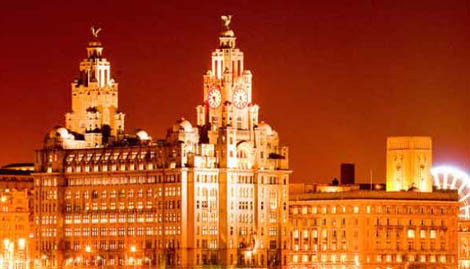
liverpoolRather a last minute decision, but I am heading up to the MA conference on Monday night.  I do love the buzz of conference season, the feeling that change is so immediate that you can taste it in the air.  The last few years, I haven’t been able to head along because I have had other work on, but this year, I still have work on, but I thought ‘COME ON!!! Where’s your sense of adventure?’

I’ll be hanging out in the exhibition hall – always the best place to gather the gossip and find out how the inevitable to and fro of the sector is working this year.  Last time I was at the MA conference, in 2008, it was also in Liverpool, and it was not a good year – all the regional MLAs were being closed down and there was a tired and frantic feeling about the place.

This year, the cuts are still biting and I am almost afraid to ask old friends how their jobs are going, just in case they have.  Still, there is a definite lift to the mood.  Now that the Arts Council have stepped in as a lead organisation for funding the sector, there is a bit more hope about the place.  New museums trusts have been formed over the last 5 years, and the staff who remain are tougher and more resilient.  Fortunately, we have a long tradition of trying to get by on very little, which helps (not a lot, but it helps).

So, I am looking forward to meeting old colleagues, forming new relationships and generally sniffing the air.  Hope to see some of you there.

Hello world!

Jenni Waugh


Greetings and welcome to Jenni Waugh Consulting!

Established as a freelance consultant in 2009, I have finally got round to creating a website so that you can keep up with the work I’m doing and contact me to commission some more.

The site is currently under development, so if the information that you want isn’t immediately obvious, contact me and I will answer your queries as soon as possible.