Birmingham’s First Folio Tour: A Unique Community Experience

Birmingham’s First Folio on display in the Bullring Shopping Centre, 21 October 2023

One of the most significant volumes in Birmingham’s Shakespeare Memorial Collection is a 400 year old printed copy of Mr. William Shakespeare’s Comedies, Histories, & Tragedies.

The Everything to Everybody (E2E) team achieved an innovative national first by taking the City’s precious First Folio out of the Library of Birmimgham (LoB) on tour to 16 community venues around Birmingham and the West Midlands, including HMP Birmingham where it was viewed by 28 prisoners and 5 staff members.

This book is known to academics, librarians and curators as the First Folio. It was published in London in 1623, about seven years after Shakespeare had died and contains 36 of his plays.

Birmingham’s copy of Shakespeare’s First Folio is unique because it is the only one bought as part of a dedicated programme for improving people’s lives through culture and education. It was bought in 1881 for all the people of Birmingham, no matter their status. Of the 750 copies printed in London in 1623, only a third still exist, of which 84 are in the Folger Shakespeare Library in Washington DC. Birmingham’s Folio is one of very few in public hands.

Taking the Folio on tour was a huge logistical challenge:

LoB was initially nervous about the First Folio going out on tour. Typically, such objects would be loaned to similar institutions, so LoB and E2E had to develop an approach that assured conservation professionals.

The E2E Project Manager and LoB Operations Manager carried out multiple risk assessments and overcame a series of internal challenges to obtain appropriate permissions to take the Folio out; to make suitable security arrangements to ensure its preservation and safety; and to work closely with their chosen partners to ensure correct display conditions at every venue for up to 4 hours at a time in a bespoke case.

What was explained and what we asked was well presented … it was a privilege to get up close and personal to this great book. I was literally a[n] arm length away from it. Many thanks for the experience. [Prisoner feedback]

As befits a text so fundamental to Britain’s theatrical heritage, the Folio arrived dramatically at each venue in a security van, accompanied by a retinue of academics, librarians, archivists, project staff, volunteers, a conservator and a security guard.

This was an inspiring presentation of community collaboration, creativity and togetherness that also taught me a lot about Shakespeare

WATCH our short film, First Folio Tour, to see how the E2E team overcame internal challenges and took the First Folio out on the road and hear how audiences reacted to the precious volume.

Here, you can read more about the impact of the tour on the 6,300+ people who came to see it.

Featured

Everything to Everybody: evaluation report

After more than four years in the brewing, I’m delighted to be able to share the final evaluation report for Everything to Everybody (E2E), an ambitious and inspiring 4-year project led jointly by the University of Birmingham and Birmingham City Council’s Library of Birmingham to restore the world’s first, oldest and largest Shakespeare collection in any public library to every city resident.

IN TOTAL, 270,500+ people participated in E2E activity across the project lifetime, of whom 11,793 had a close-up view of the First Folio.

It is estimated that visits to E2E events generated an additional economic benefit
to the Birmingham economy of over £900,000 in that time.

The very best thing that the partnership achieved was also a national first: they took the City’s precious, 400-year-old First Folio of Shakespeare’s plays out of the Library to 16 community venues including libraries, shopping centres, a family centre, a church and a prison.

It was an incredible pleasure and privilege to see how much people enjoyed and valued the chance to look at the book, find out more about its history as the People’s Folio, and share their own Shakespeare stories with the academics and library staff who accompanied it.

E2E provided a valuable testbed for University of Birmingham’s new Culture Forward programme of cultural and civic partnership activity and has given staff at Library of Birmingham new impetus and valuable digital resources to celebrate the magnificent collections it holds and share them with the City.

Credit where it’s due, I led a team of associates to complete this evaluation as it was HUGE!

  • Jonathan Durnin of Durnin Research, who led on the economic impact assessment
  • Tonia Collett of The Collett Consultancy, who supported the evaluation of the activity plan
  • James Macdonald Media Services who produced a series of 11 impact case studies which have been uploaded to the E2E Youtube channel

I’ll post again about some of the case studies we created, but for now… enjoy the report!

The whole project was supported by funding from the National Lottery Heritage Fund, History West Midlands, Birmingham 2022 Commonwealth Games and a number of private donors.

We’re evaluating another castle

Sun shines on a large, partly ruined stone building with an archway and windows - this is Newark Castle Gatehouse.

Durnin Research Ltd and Jenni Waugh Consulting Ltd are delighted to have been appointed by Newark and Sherwood District Council as evaluators of the Newark Castle ‘Building Bridges’ project.  Funded by the National Lottery Heritage Fund, ‘Building Bridges’ will establish Newark Castle and Gardens at the heart of the town, creating a significant, culturally creative heritage venue for the people of Newark, and making Newark a better place to live, work and visit. 

Through the community co-curation of a programme of heritage interpretation and the creation of inspiring activities and events, the project will increase the diversity of local people who engage with the heritage for their inspiration, enjoyment and wellbeing.  The project will complement a major capital works for the renovation of the Castle running alongside Building Bridges, funded by the Towns Fund.

The evaluation will capture learning from the experience gained in undertaking the project, and measure success against the expected outcomes.  The evaluation will include input from visitors, community participants, volunteers, staff, and other stakeholders.

As soon as we have more information about the project plans, we’ll share them here. In the meantime, if you want to get involved in the consultation, you can get in touch here: https://www.newark-sherwooddc.gov.uk/newarkcastlebuildingbridges/

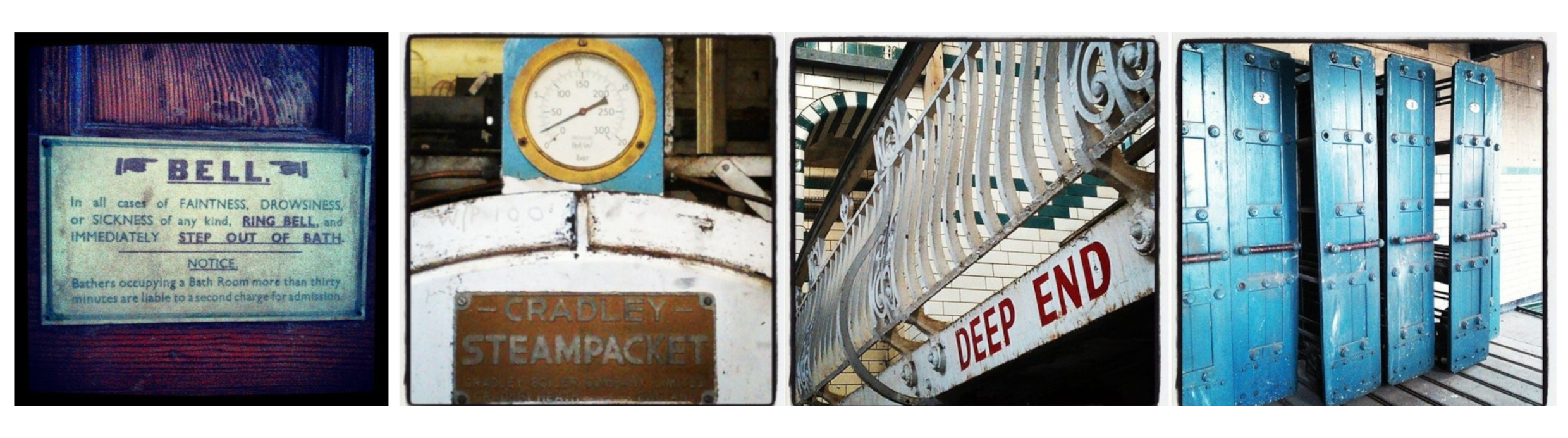
Exciting new contract with Moseley Road Baths

Jenni Waugh Consulting Ltd, Durnin Research, The Collett Consultancy and James McDonald, filmmaker, are delighted to have been appointed by Birmingham City Council and Moseley Road Baths CIO as evaluators of the Diving In project. 

With the support of the National Lottery Heritage Fund, Diving In promises to complete the transformation of Moseley Road Baths. The restoration will create a positive ripple effect across the community making Balsall Heath a more exciting place to live, work and visit and increase the diversity of local people who engage with heritage for their inspiration, enjoyment and wellbeing. 

This first stage of the National Lottery Heritage Fund investment will allow the partnership to develop their ambitious £32.5m Diving In project, which by 2029 will return swimming to the Gala Pool for the first time in 25 years and adapt other spaces, including the old laundry and slipper baths, to host fitness and wellbeing classes, a gym and building on its existing programme of cultural and arts events.

The funding will support the development of cross-generational cultural programmes with Balsall Heath library, focusing on families and older people, and learning opportunities for schools. It will also include the development of a Volunteering, Skills and Participation model with a multitude of opportunities to support activities and operations across the two buildings.

The evaluation will capture learning from the experience gained in undertaking the project, and measure success against the expected outcomes.  It will include input from visitors, community participants, volunteers, staff, and other stakeholders and will support the establishment of ongoing quality monitoring and evaluation.

The capital works are also being supported by funding fromthe Levelling Up Fund, Birmingham City Council, Historic England and World Monuments Fund. For more information, see https://moseleyroadbaths.org.uk/

‘Through play they show us’: how Thinktank co-produced the cool Minibrum gallery with Early Years children

The Minibrum gallery and associated learning and community engagement programmes were co-produced entirely with Early Years children (0-8 years old), their families, specialists and educators, and expert advisory panels. In creating Minibrum, Birmingham Museums Trust (BMT) broke new ground, becoming the first UK Science Centre to create a STEM-learning gallery and programme entirely dedicated to this age group.

Just as lockdown began in March 2020, I started work on the evaluation of the fascinating MiniBrum project at Thinktank in Birmingham. Over the next 18 months I worked with staff from BMT and a range of experts to create tools that ensured the young children’s responses were at the heart of the evaluation as well as the development.

The co-production team was led by an Early Years Specialist and supported by an Advisory Board and Working Group that included both external stakeholders and staff from across BMT’s Learning and Engagement, Curatorial, Conservation, Operations and Commercial teams.

The children, their families, education and community organisations were involved in all aspects of design from the developing the content and layout of the toilets, café and gallery zones, to the focus of the learning and events programming. The project team also drew on expertise from academics, STEM providers, teachers, parents, health and community workers.

When MiniBrum opened to the public in May 2019 it was an immediate hit with families, schools and children’s groups. Throughout lockdown BMT continued co-production work online, on and offsite with children, schools and community groups to develop further elements including the Jewellery Factory exhibition, early years planetarium show and multi-sensory family activities.

Observing the galleries and activities today, it’s a delight to see how confidently babies, infants and young children use the spaces playfully and imaginatively to explore STEM in the world around them.

The following 2 pdf guides were created at the end of the project to provide 9 top tips to co-production with this challenging and inspiring age-group. Feel free to download and share with your colleagues!

Note that I will be discussing the project evaluation at the Visitor Studies Group annual conference on 13 May 2022

Minibrum was supported by a grant from the Inspiring Science Fund, a partnership between UK Research and Innovation (UKRI) and Wellcome.  Between 2017 and 2021, 16 nurseries and primary schools, 6 community organisations and 3 universities took part in MiniBrum co-production activity.

Evaluation #hacks

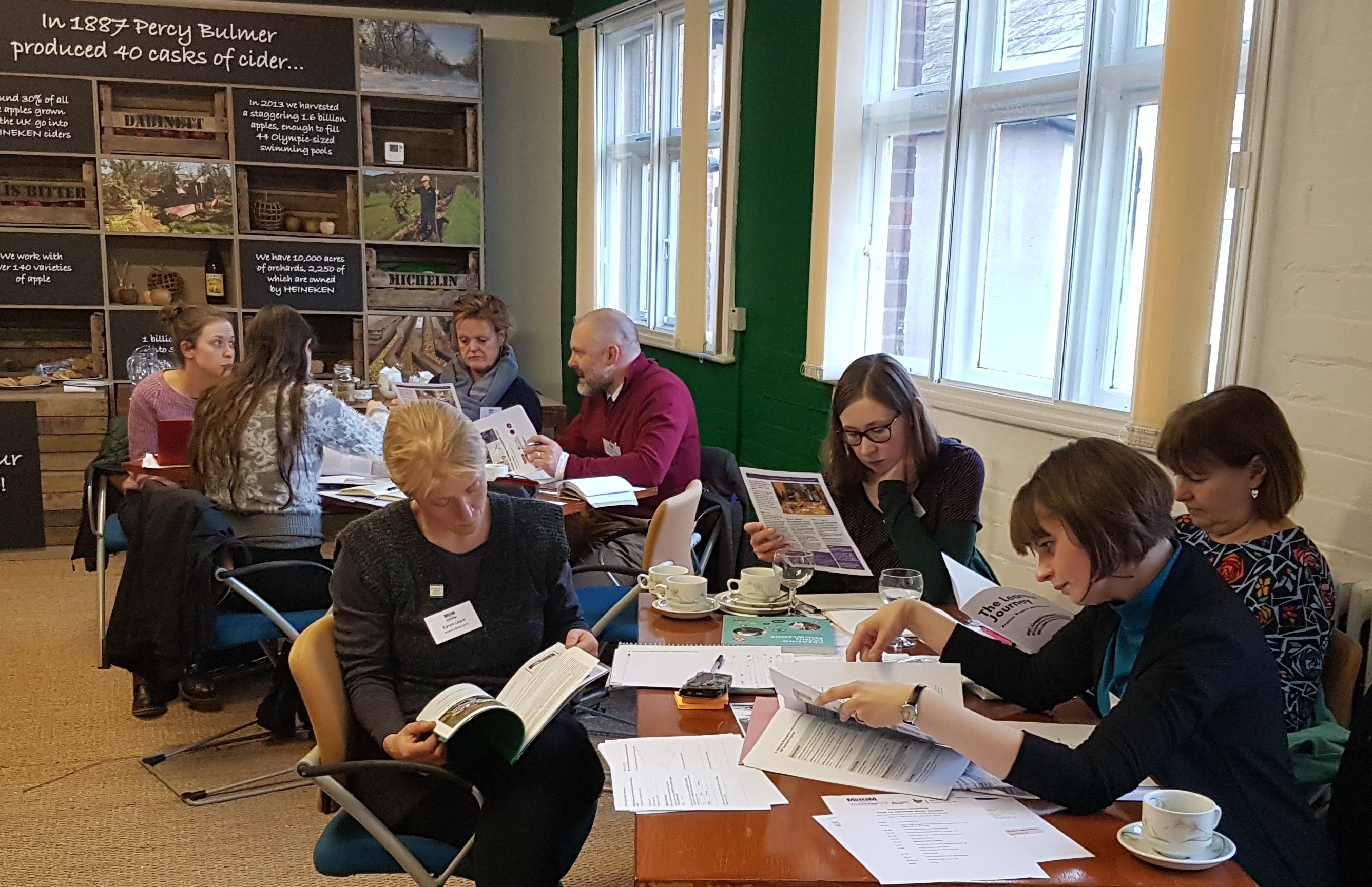
20191119_152448 cropWhat a super day!  2 years in the making (don’t ask) and then yesterday I met up with 15 of the region’s keenest and we had a splendid day mucking about with outcomes frameworks, logic chains, question banks and love them/loathe them survey tools.
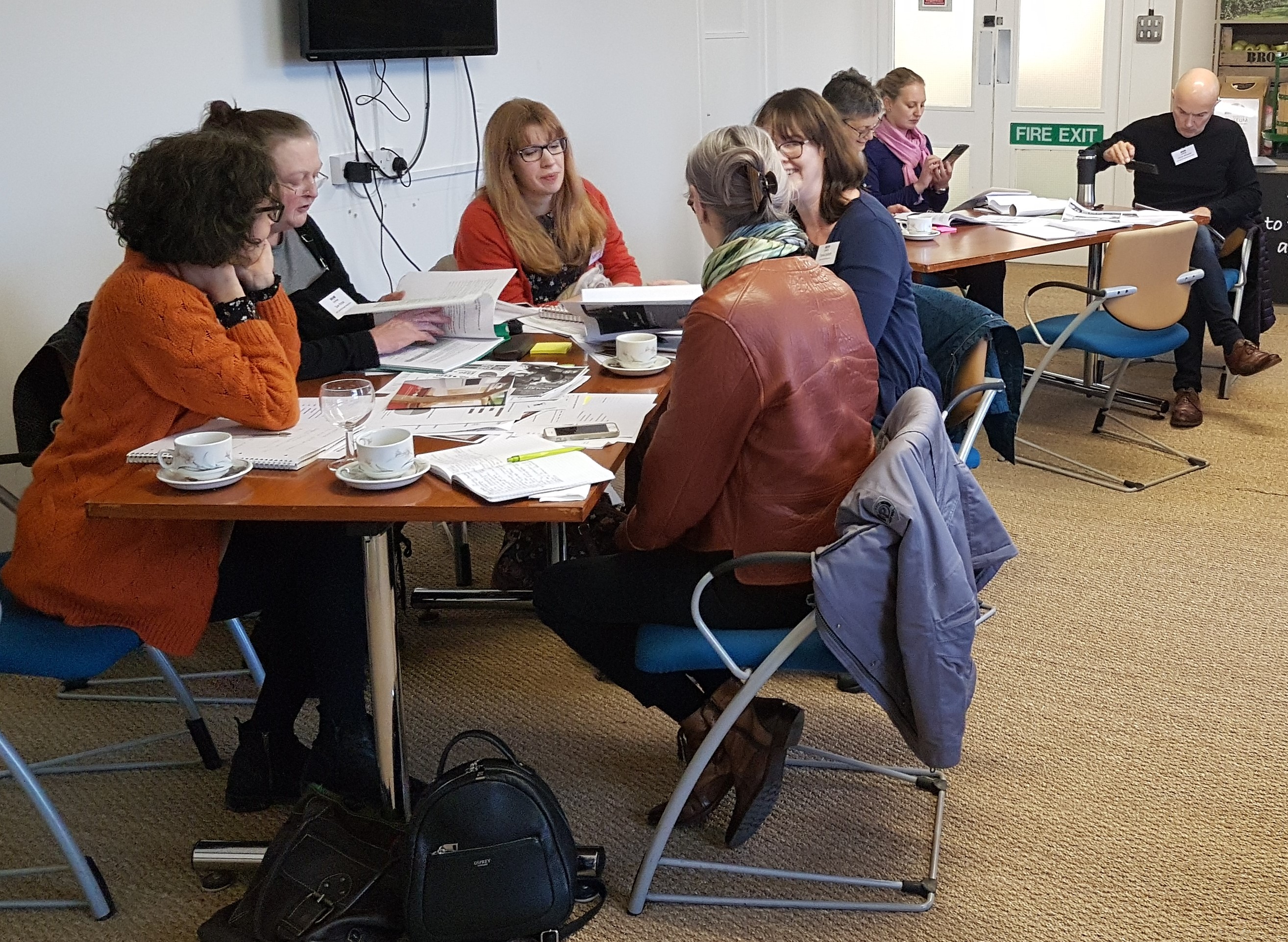
The fulfilment of a private ambition really – West Midlands Museum Development team had invited me to devise and deliver an Evaluation Training Day at the Hereford Museum of Cider.

My ambition for the day was to provide museum professionals with an overview of how to plan for and structure an evaluation programme that is embedded in project activity from start to finish. All were encouraged to base the ‘hypothetical’ planning work on live projects in their own organisations.

I took the group through the planning process from formative enquiry, carrying out monitoring and transitional assessment research through to summative evaluation and reporting.

Yes, it was as nerdy as it sounds but we had enormous fun and there was a great buzz in the room as people worked together to share their knowledge and experience and banish their fears of EVALUATION.  It’s a beast, but the course feedback suggests I’ve helped people to tame it!

We also

  • created our own evaluation framework and question banks
  • considered the levels of resource (money, time, staffing, training) required to carry out evaluation work
  • discussed the pros and cons of various approaches to monitoring and survey
  • finished with a good natured debate over whether to tackle the work in-house or commission an external consultant for the job.

As I said, it was fun with information attached.  Actually, we were having so much noisy fun that a member of the Cider Museum team asked what kind of party we were having and could he join in!

Keep reading below the picture for links to evaluation guidance and resources…

20191119_152447 crop

Here are some of links to information and tools we talked about in the session which might well be of use to you, my darling readers.

What types of evaluation are there? Here’s a handy guide from the V&A Learning Team to some of the terms used by consultants!

National Lottery Heritage Fund:

Arts Council England:

Measuring Learning

Association for Independent Museums (AIM): measuring economic, social and environmental impact

Measuring Wellbeing

Head Heart Bag Bin (pdf) – a visual survey tool for evaluating the learning and wellbeing impact of your activity

Collecting Birmingham: evaluation of a Prize Winner!

Much as I love all my clients, it’s a tremendous buzz when their work wins prizes!
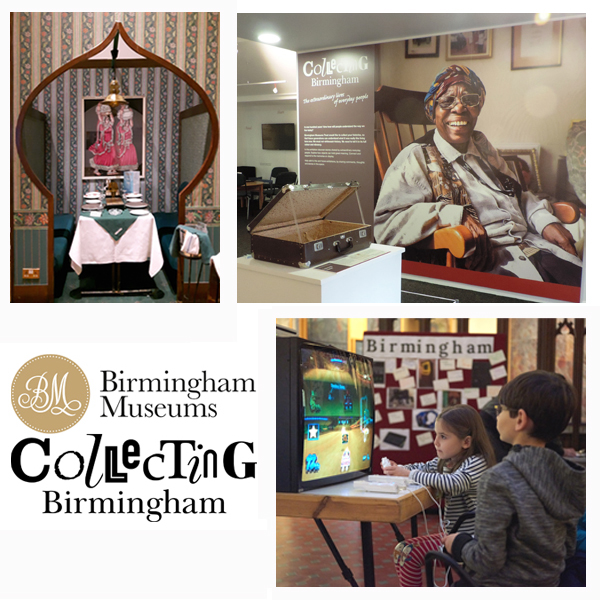
Birmingham Museums Trust commissioned me to evaluate their terrific Collection Birmingham project during 2017-2018, and then used elements of my report to help them win the Museums Association’s Museums Change Lives Award 2018.

The project was funded through the HLF Collecting Cultures programme and focussed on bringing people from some of Birmingham’s diverse communities together with artists and curators to shape the future of Birmingham Museum Trust’s collecting policies.

Over 1,800 objects were acquired through consultations with local people including The Rivers of Birminam, a series of 100 black and white photographs by Vanley Burke chronicling 40 years of Caribbean heritage in Birmingham. The photographs are by far the largest and most significant collection of work by the celebrated photographer in any public collection and were displayed at Birmingham Museum & Art Gallery earlier this year.

I feel like the photos belong to the people of Birmingham as so many people feel connected to the stories and experiences documented in them. I’m very pleased they will be part of the city’s collection.

Vanley Burke

As an evaluator, it was exciting to see how eager the Collections Team of curators, conservators and cataloguers were to get involved with community engagement activity more usually carried out by the Learning & Engagement team members.

As the project team worked across the whole Trust to bring many permanent staff members’ skills to bear on creating networks, it is clear that Collecting Birmingham has significantly increased the network of communities and local experts with whom Birmingham Museums Trust hopes to work in future.

The very public nature of the project and the open consultation processes employed have gone a long way to demonstrate goodwill to and build trust with communities who had previously had reason to suspect the institution’s intentions. The team have also supported external partners to ensure a more representative process of collecting and presenting culturally significant objects to wider audiences in future years.  As a result, participants have demonstrated changes in attitude towards BMT that augur well for future collaboration.

There is no doubt of the impact that Collecting Birmingham will have on BMT’s Collections Development Policy and on the organisation as a whole. As Rebecca Bridgman, Project Manager and Curator said:

As a result of Collecting Birmingham, I don’t think we’ll ever go back to the method whereby only curators decide what new objects to acquire for the collection.

You can download the report pdf here: Collecting Birmingham Evaluation Report 2018

Art & reminiscence work with dementia patients

Last Autumn, it was my pleasure to research and evaluate the contribution that structured Art & Reminiscence activity can provide to the daily life and care of dementia patients in residential homes.

The full report can be downloaded here: Arts and Reminiscence in Wychavon Care Homes report 2016-02-15

2015-11-23  Bricklehampton 2
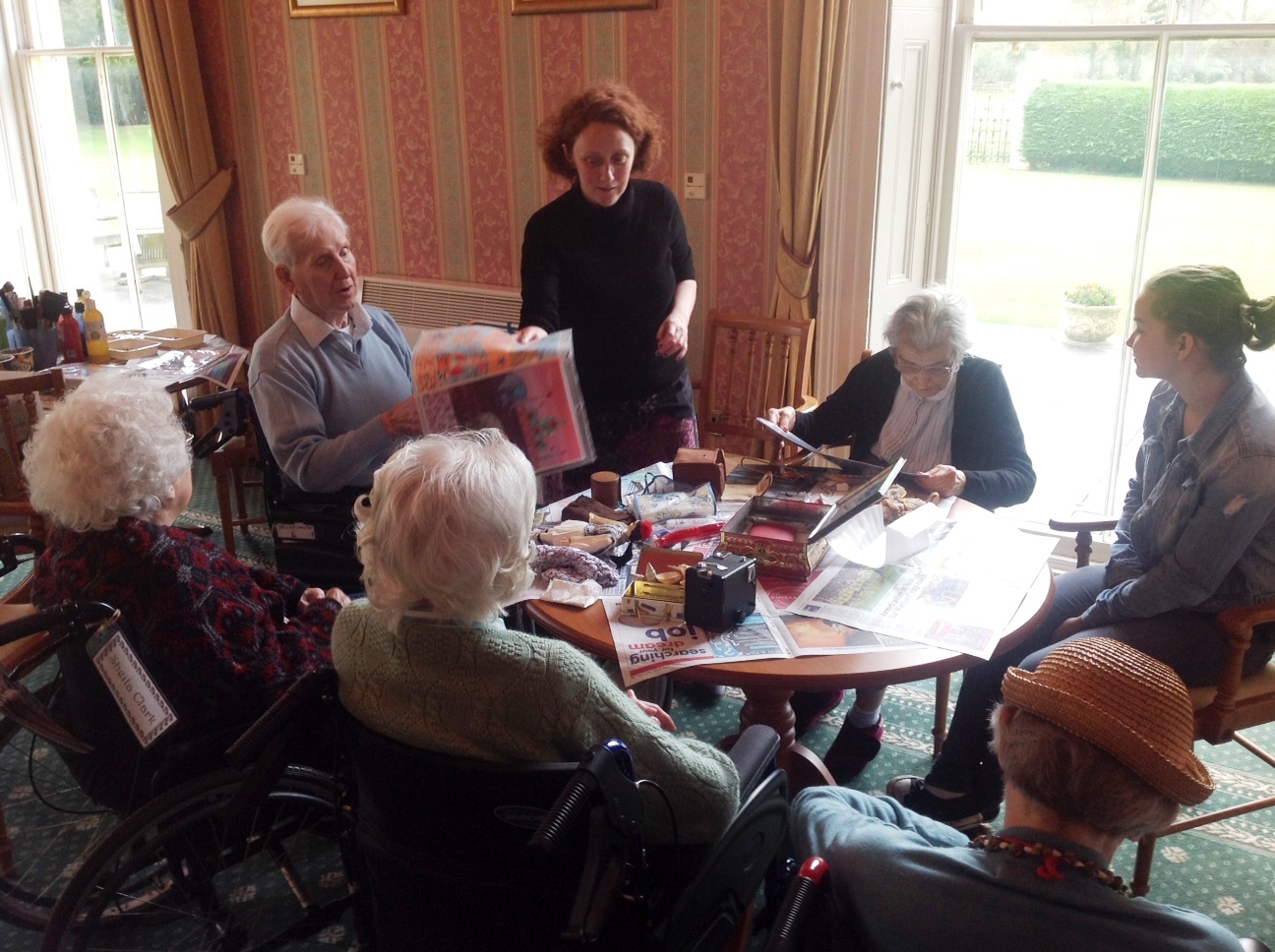
Commissioned by Museums Worcestershire and Wychavon District Council Arts Development Officer, the creative and reminiscence activities took place over 5 weeks in 6 different residential care homes across the Wychavon area.  The activity was intended as a pilot – although both organisations have carried out one-off activities in care homes over the last few years, this was their first concerted attempt at providing more in-depth and structured activity over a period of weeks.


The work was very challenging, given the participants’ varied capacity to take part.  In some homes, the groups sizes were comparatively small (up to 6 participants) making it easier for the facilitators to focus on each individual and encourage them to take part.  In other homes, large group sizes or the profound state of some participants’ dementia made it far more difficult to make a meaningful connection.  However, as the sessions ran over a series of weeks, the facilitators were able both to build a relationship with the more able participants, and to make slow roads toward connection with the more profoundly disabled residents.

Both facilitators spoke of the work as being emotionally laborious, but also of the rewards they felt they had received when a silent participant suddenly smiled in recognition, or reached for a handshake before leaving.

The evaluation methodology is one that I used in 2013 on the Memories in the Making work for Wolverhampton Art Gallery, and is based upon the Warwick Edinburgh Mental Wellbeing Scale (WEMBWS) and Dementia Mapping techniques.  This Worcestershire project enabled me to test the methodology further and to continue to build upon my experience and knowledge in this rewarding field.


New report published: MEDIEVAL ABBERLEY REVEALED

Researching and writing evaluation reports is fascinating and enjoyable part of my work.  It is a privilege to be able to follow project teams and volunteers as they deliver complex community activity and then to be able to reflect back to them the impact their work has had.

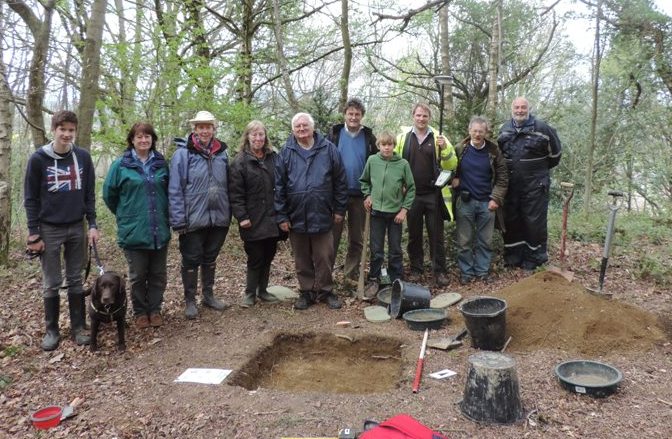
Excavating for Abberley Castle. An added bonus of evaluating the Medieval Abberley Revealed project!

Excavating for Abberley Castle. An added bonus of evaluating the Medieval Abberley Revealed project!

This week, I finished work on the evaluation report for MEDIEVAL ABBERLEY REVEALED, an HLF-funded Medieval Abberley Revealed community archaeology project which took place over 12 months, and built upon the enthusiasm for local history sparked by the popular Abberley Lives 20th century history project of 2012-2013.

Participation levels on this project were really high, with over 13% of the village either volunteering or attending an event.  The social and well-being outcomes were very strong – even long-time residents expressed how much they had enjoyed meeting new neighbours and volunteering with friends.

The activities seemed to generate a genuine sense of occasion, drawing volunteers aged from 9 to 90 years.  As a local resident and member of the AHPS said later:

‘We joined Abberley Hills Preservation Society but it went dormant for a while.  This activity has revived it all and we have met a lot of people we had never met before. It’s brought us together to fight against [the proposed] houses.  I would absolutely do it again.’

This was the first project evaluation where I was able to use multi-media sources to provide evidence of activity.  Several of the participants have very active social media feeds, so I was able to collate real-time responses during activity and save them using Storify.  I also trained project volunteers to be able to blog so that they could encourage each other to share their reflections online via the Abberley Lives website.

Furthermore, with the advice and assistance of Clear Picture Productions, I have also recorded and edited my first short films for the project website that capture the excitement and curiosity generated during live events.

Thanks very much to Abberley Hills Preservation Society for hiring me to do this lovely piece of work, and for giving me the chance to explore new means of gathering evidence.

Download the report: Medieval Abberley Revealed evaluation